
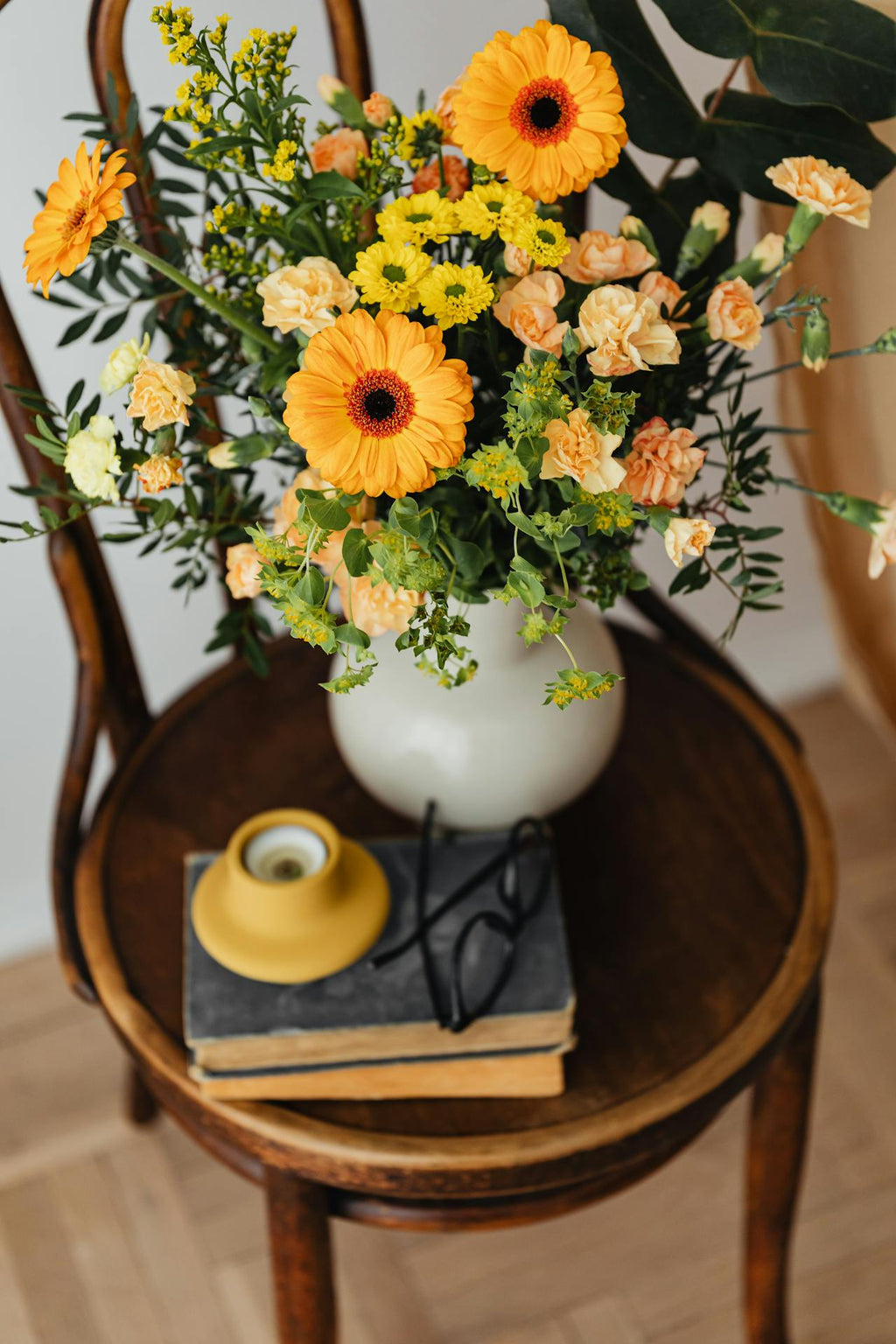
Flowers have played a significant role in Chinese culture for millennia, influencing art, poetry, and even the Chinese writing system. Many Chinese characters related to flowers originated from pictographs and evolved into logograms over time. These characters often carry symbolic meanings, reflecting the deep cultural associations of flowers in Chinese traditions. This guide explores how flowers inspired the formation of Chinese characters and their meanings.
1. The Radical "艹" (Cǎo) – The Grass Radical
In Chinese writing, many plant-related characters share a common component: 艹 (cǎo), the "grass radical." This radical appears at the top of numerous characters related to flowers, herbs, and plants. It visually represents vegetation and helps indicate the meaning of a character.
Examples of Flower-Related Characters with 艹:
-
花 (huā) – Flower
- The character combines 艹 (cǎo, grass/plant) with 化 (huà, change/transformation), signifying blooming and natural beauty.
-
草 (cǎo) – Grass
- A direct representation of plants, using 艹 and 早 (zǎo, morning), symbolizing growth in early hours.
-
莲 (lián) – Lotus
- The lotus is a sacred flower in Chinese culture, representing purity and enlightenment. The character 莲 uses 艹 and 连 (lián, to connect), symbolizing how the lotus connects water and air.
2. Pictographic and Ideographic Influences
Early Chinese characters were pictographs—drawings that represented objects. Some flower-related characters evolved from these representations.
Pictographic Characters Inspired by Flowers:
-
梅 (méi) – Plum Blossom
- The character 梅 consists of 艹 (grass radical) and 每 (měi, each/every). The plum blossom represents perseverance and renewal, blooming in winter.
-
菊 (jú) – Chrysanthemum
- Chrysanthemums symbolize longevity. The character contains 艹 and 局 (jú, arrangement), reflecting the flower’s structured petals.
3. Symbolism and Meaning in Chinese Characters
Flowers hold deep symbolic meanings in Chinese culture, which is reflected in the characters used to describe them.
| Character | Pinyin | Flower | Symbolism |
|---|---|---|---|
| 兰 | lán | Orchid | Elegance, Nobility |
| 荷 | hé | Lotus | Purity, Enlightenment |
| 牡丹 | mǔdān | Peony | Wealth, Prosperity |
| 桂 | guì | Osmanthus | Honor, Success |
| 芍药 | sháoyào | Peony (herbaceous) | Love, Beauty |
Each flower's meaning is deeply embedded in Chinese philosophy, poetry, and literature.
4. Evolution of Flower Characters in Calligraphy
Chinese calligraphy has transformed the way flower-related characters are written. In ancient scripts such as Oracle Bone Script (甲骨文), characters were more pictographic, resembling actual flowers. Over time, they evolved into seal script (篆书), clerical script (隶书), and modern simplified script (简体字).
For example, the character 花 (huā) in Oracle Bone Script resembled a blooming flower, while in later scripts, it became more abstract.
5. Flower-Inspired Idioms and Expressions
Chinese idioms (成语) often include flower-related characters, reflecting cultural values.
- 花好月圆 (huā hǎo yuè yuán) – "Flowers are beautiful, and the moon is full" (Symbolizes happiness and harmony).
- 一枝独秀 (yī zhī dú xiù) – "A single flower stands out" (Describes outstanding talent).
- 百花齐放 (bǎi huā qí fàng) – "A hundred flowers bloom" (Encourages diversity and creativity).
Flowers have deeply influenced the Chinese language, from the structure of characters to their meanings and symbolism. The 艹 radical, pictographic origins, and cultural associations of flowers have shaped many words in Chinese writing. Understanding these characters provides insight into both the language and Chinese cultural traditions.


